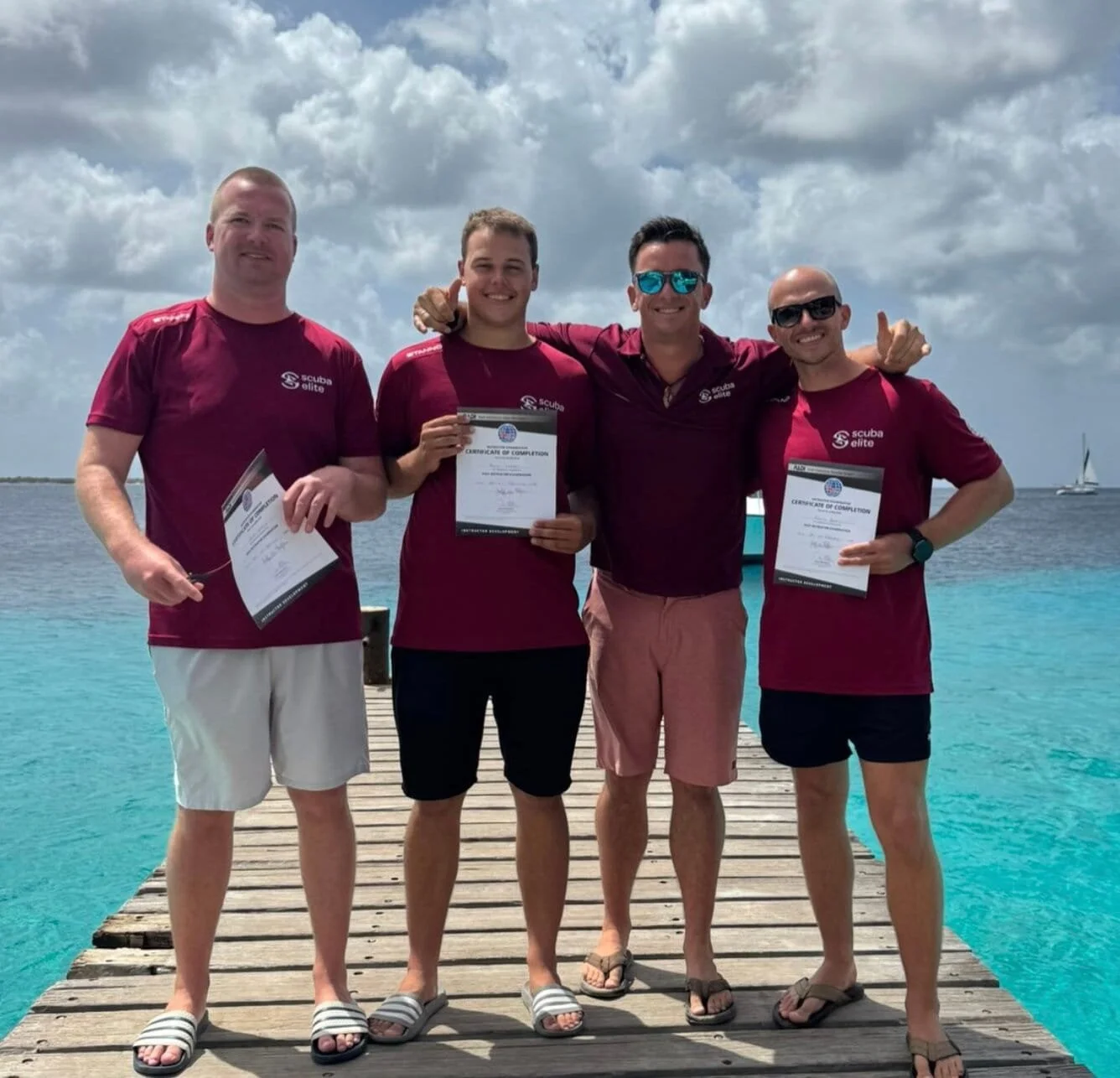

Becoming a PADI Dive Instructor on Bonaire - a glimpse of our IDC
Last Friday, two candidates walked out of their Instructor Examination as newly certified PADI Instructors. If you asked them what the hardest part of the last few weeks was, neither of them would say "the exam." Surprising? The instructor training is the part most people never see. It's the real story behind the certification card. This post is about what becoming a PADI dive instructor on Bonaire actually looks like — and why, at Scuba Elite, we care as much about who you become during the PADI IDC (Instructor Development Course) as whether you pass.
What a PADI IDC Actually Involves
A PADI Instructor Development Course is the professional-level training that takes a Divemaster to Open Water Scuba Instructor status. On paper, it covers dive theory, teaching methodology, physics and physiology, and in-water skill demonstrations, all assessed against PADI standards.
But standards are the floor, not the ceiling. Anyone can memorize parts of a knowledge review. Far fewer people learn to read a nervous student's body language before they've even entered the water, or know when repeating a skill for the fourth time isn't failure — it's exactly what that person needed.
That distinction is why we built our IDC the way we did.
The Structure of Our Program
Our IDC runs in small groups, deliberately. We've found that candidates learn to teach well — not just teach to pass — when they get real, individual feedback rather than being one of a dozen people in a lecture hall.
A typical week includes:
Morning theory sessions covering dive physics, physiology, and PADI standards in depth
Confined and open water teaching presentations, where candidates practice instructing real skills to real students
Structured feedback sessions after every presentation — specific, honest, and never rushed
Business and professional development discussions, since being a good instructor is about more than the water
We follow PADI standards closely, not because we have to, but because they exist to keep people safe. But standards alone don't make someone a great instructor. Presence does. Patience does. The willingness to notice when a student is struggling and adjust — not push through — does.
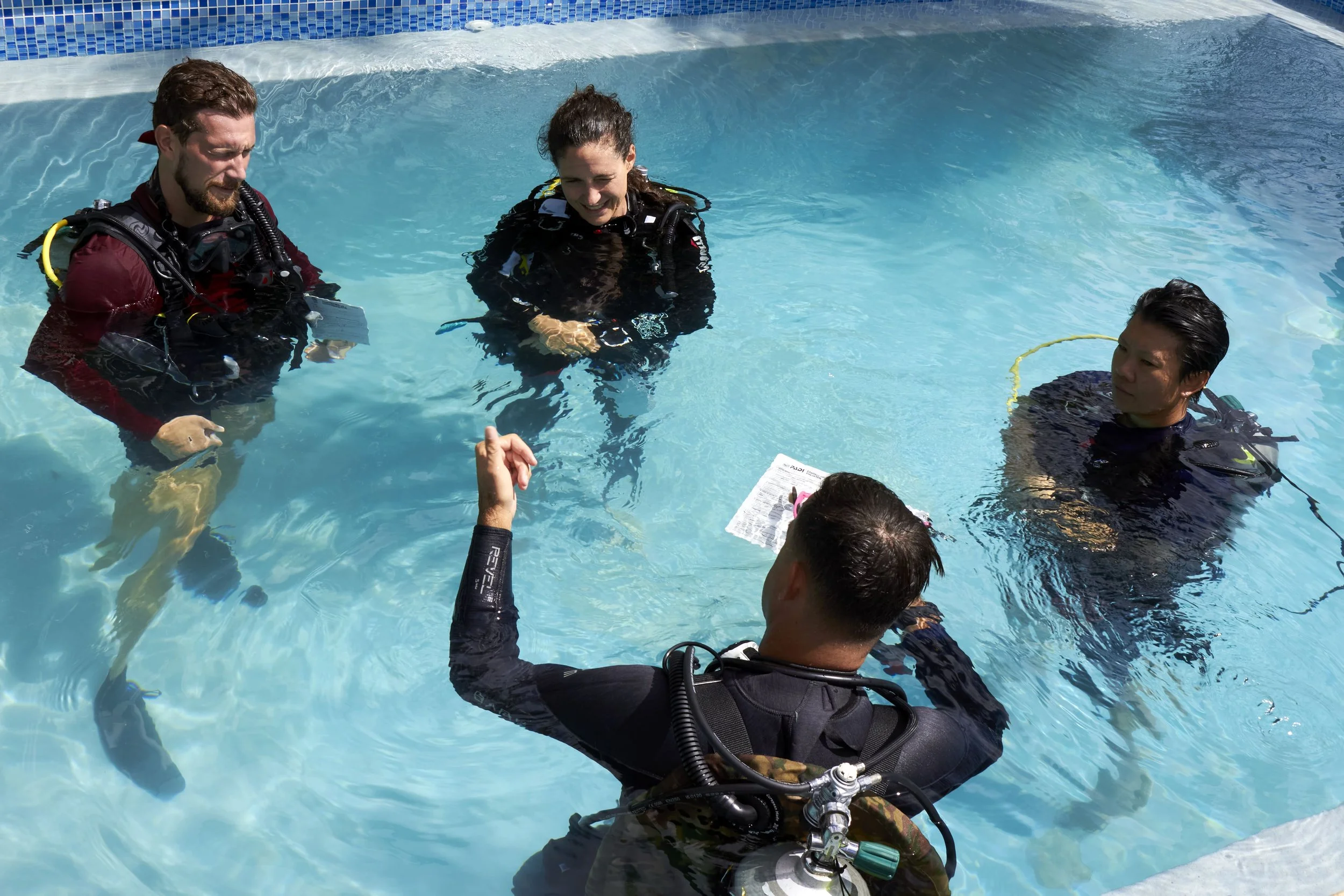
Confined Water Teaching Presentations
Why We Train This Way
At Scuba Elite, we believe the way you train future instructors says everything about the kind of dive center you are. If we cut corners in an IDC, that mindset shows up later — in how that instructor teaches their own Open Water students five years from now.
So we don't rush the process. If a candidate needs to repeat a presentation, they repeat it. If someone struggles with a specific skill, we work through it together instead of moving on and hoping it clicks later. This isn't about lowering the bar — it's about making sure everyone who leaves our program has genuinely earned their confidence, not just their card.
We've said before that at Scuba Elite, diving isn't the product — the way we take care of people is. That applies just as much to our instructor candidates as it does to a first-time guest snorkeling Klein Bonaire.
What It Feels Like to Go Through Our IDC
Candidates often tell us the same thing near the end of the course: they expected to come out knowing more about diving. They didn't expect to come out knowing more about themselves — how they communicate under pressure, how they handle to solve a problem with a student who isn't getting it right away and how they show up when things don't go perfectly.
That's intentional. Teaching is a deeply human skill before it's a technical one. Our Course Director and IDC Staff Instructors don't just check boxes on a PADI form — they mentor. They ask questions and give the kind of feedback that's honest enough to actually help, while delivered with enough care that it never feels like criticism for its own sake.
This is also why we're proud of milestones like last Friday, when two of our candidates completed their Instructor Examination with high scores! Not because passing an exam is rare — but because we watched both of them grow into instructors who lead with the same attention to detail and careful approach we try to model every day.
Is an IDC Right for You?
If you're considering an IDC, you're probably not just asking "can I pass this." You're probably asking bigger questions: Am I ready for this kind of responsibility? Will I actually learn to teach well, not just get certified? Will I be supported if I don't get something right away?
Those are exactly the right questions to ask — and exactly the ones we want candidates asking before they commit. A good IDC should stretch you. It shouldn't break you, rush you, or leave you feeling like just another name on a roster.
If you're weighing whether this is your moment — whether it's the leap between one chapter of life and the next — we'd rather you ask us directly than guess. Get in touch about our next IDC and we'll talk through what the course actually involves, honestly, before you decide anything.
For more on PADI's official IDC requirements and standards, you can visit PADI's Instructor Development Course page.
The Bigger Picture
Every instructor we train eventually goes on to teach their own students. Some of them on Bonaire, some elsewhere in the world. That means our influence doesn't stop when a candidate passes their exam. It continues in every Open Water course they teach for years afterward.
That's why we take this as seriously as we do. Not because standards demand it, but because we believe the world needs more dive professionals who teach with heart, lead with responsibility, and never forget that behind every certification card is a person who trusted them to get it right.